
By Nekesha Burrell / SoulDeep Reflections
Written by: Nekesha Burrell
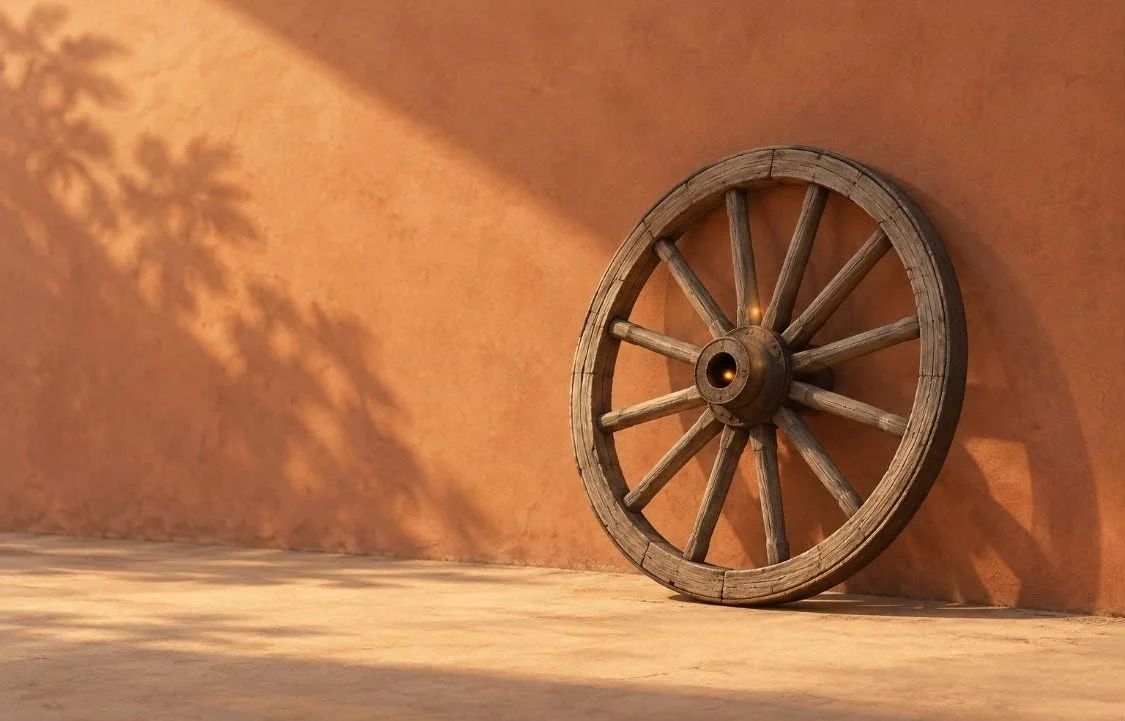
We wanted to travel and carry more with us.
The wheel helped us move.
We wanted to cross the water.
The boat helped us sail.
We wanted to see farther.
The telescope brought the stars closer.
We wanted to see inside the body.
The X-ray showed us the bones.
We wanted to see the brain and the soft parts.
The MRI showed us what was hidden.
We wanted a wider view of our world.
Satellites helped us see Earth from above.
And now, on a screen, we can see a face across the world,
in a different time,
almost like we are in the room.
What have we learned
What have we learned from this?
Something unfamiliar can frighten us
before we understand what it can do.
Fear of what we don’t understand has even taken lives.
As we learned to use fire, it changed how we lived.
And it still asks something of us:
care in how we use it.
Because the same fire that cooks a good meal
and keeps you safe in the winter
can take the life of a person
and of nature.
The power to choose
Do we ever run out of knowledge?
No. We never run out of knowledge.
We forget the power we had all along:
the power to choose.
The knowledge was never the danger.
Different discoveries. Different possibilities.
What matters is what we choose to do with them.
Where ideas come from
Where do you think the idea that sparks an invention comes from?
It has never been a new idea.
It has always been: how do we work smarter, not harder.
Think of the difference between dragging a heavy load
and putting it on wheels.
The work still needs doing.
But the way we carry it can change.
The knowledge was always there.
The choice was always ours.
The facts behind the lines:
The wheel. First used as potter’s wheels in Mesopotamia around 3500 BC, before anyone put them on a cart. Smithsonian Magazine
The boat. The oldest known boat, the Pesse canoe, is around 10,000 years old. Drents Museum
The telescope. Hans Lippershey filed the first patent in 1608; Galileo then pointed one at the sky. NASA
The X-ray. Wilhelm Rontgen found X-rays by accident in 1895; his first image showed the bones of a hand. Nobel Prize
The MRI. In the 1970s, researchers turned magnetic resonance into images of soft tissue like the brain. Nobel Prize
Satellites. Sputnik, the first artificial satellite, reached orbit in 1957; satellites have watched Earth from above ever since. NASA
Fire. Human ancestors were using fire about a million years ago; ash and burned bone at Wonderwerk Cave in South Africa are the earliest secure evidence. University of Toronto
